Kathopnishad / Katha Upanishad (कठोपनिषद्) is part of Krishna Yajurveda.
The Katha Upanishad has:
2 Adhyāyas (अध्याय / chapters)
6 Vallīs (वल्ली / sections), 3 per chapter each
119 mantras/verses in the commonly followed recension/count.
ॐ उशन् ह वै वाजश्रवसः सर्ववेदसं ददौ ।
तस्य ह नचिकेता नाम पुत्र आस ॥ १॥ 1.1.1
Meaning: Vājaśravasa, desiring the fruits of the sacrifice, gave away all his possessions. He had a son named Nachiketa. Vājaśravas / Vājaśravasa — वाजश्रवस / वाजश्रवसः also called Aruni Auddalaki Gautama is performing a great Vedic sacrifice. Traditional commentators identify it as the Viśvajit sacrifice — a sacrifice in which the sacrificer gives away his possessions.
तं ह कुमारं सन्तं दक्षिणासु नीयमानासु
श्रद्धा आविवेश सऽमन्यत ॥ २॥
Meaning: As the gifts were being taken away/distributed, Śraddhā entered the heart of the young Nachiketa, and he began to think.
पीतोदका जग्धतृणा दुग्धदोहा निरिन्द्रियाः ।
अनन्दा नाम ते लोकास्तान् स गच्छति ता ददत् ॥ ३॥
Meaning: “These cows have drunk their last water, eaten their last grass, yielded their last milk, and have lost their vitality. The worlds attained by the person who gives such gifts are joyless.” The entire purpose of the sacrifice is supposed to be generosity and religious merit. But if someone gives away things that are already useless, while keeping valuable possessions for himself, the external ritual may be happening—but the spirit of true giving is questionable.
So Nachiketa asks: “Father, to whom will you give me?” Nachiketa asks again and again. And finally his father says: “I give you to Death.” The father is speaking in anger/frustration. But Nachiketa takes his father’s words seriously. His father has spoken the words. And Nachiketa doesn’t simply say: “Dad was angry; he didn’t mean it.” Instead, he begins thinking: “What does this mean for me?” He thinks about his position among people. He wonders: “What will Yama do with me?” And then he realizes something much larger: Everyone eventually dies. The young become old. The strong become weak. The living become dead. Human life is temporary. This thought doesn’t frighten Nachiketa into avoidance. Instead, it produces a question. And this is a recurring characteristic of the Upanishads: Death is not merely something to fear; it is something to investigate.
NACHIKETA GOES TO DEATH
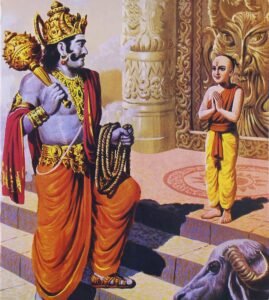
Nachiketa goes to the abode of Yama (यम). But Yama is absent. Nachiketa waits. One night passes. Then another. Then a third. He remains there as an unattended guest. This is significant because in the Vedic culture of the text, a guest—especially a worthy guest—must be received with hospitality. A traditional explanation connects atithi with someone whose arrival has no fixed date—literally someone without a predetermined tithi (date). After three nights, Yama finally returns. And Yama recognizes that Nachiketa has been waiting. Yama feels that a guest who has remained in his house for three nights without proper hospitality deserves compensation. So Yama says, essentially: “Because you have stayed here for three nights, ask me for three boons.” Nachiketa’s first request is surprisingly simple. He doesn’t ask for money. He doesn’t ask for a kingdom. He doesn’t ask to become powerful. He asks Yama: “When I return to my father, may he be free from anger and anxiety. May he recognise me and receive me with love.” This tells us a lot about Nachiketa. Even after being sent to Death, he is still concerned about his father. The first spiritual movement is therefore: शान्ति — Śānti Peace within the family and relationship. Yama grants this boon. Nachiketa will return and his father will recognise him lovingly.
Second Boon
Nachiketa says, in essence: “You know the fire-sacrifice by which a person can attain heaven, where there is no fear, no old age, no hunger, thirst or sorrow. Teach me that fire.” He asks Yama about a particular yajña (यज्ञ)—a sacred Vedic fire ritual whose proper performance is associated with attaining Svarga (स्वर्ग), heaven. Yama teaches Nachiketa the knowledge of this sacred fire. The Upanishad says that Yama explains: how the fire is established, what materials are involved, how the sacrifice is performed, the arrangement associated with the ritual, and the conditions through which the ritual produces its promised result. Yama sees that Nachiketa has: श्रद्धा — Śraddhā, बुद्धि — Buddhi, स्मृति — Smṛti, एकाग्रता — Ekāgratā . He is therefore worthy of deeper teaching. Yama becomes pleased with him. Yama tells Nachiketa that this fire will henceforth be known as: नचिकेता अग्नि Nachiketa Agni. This is extremely significant. Yama essentially immortalises Nachiketa’s name through the teaching. The idea is: “Because you have understood this fire so well, this fire will be known by your name.”
Third Boon
When a person dies, there is uncertainty about what happens. Some say that something remains after death; others say that nothing remains. I want to know the truth from you.” Yama doesn’t immediately answer. Instead, he tests Nachiketa. He offers him: wealth, gold, cattle, horses, children, grandchildren, long life, kingdoms, beautiful things, worldly pleasures. Yama is effectively saying: “Take all of these. Don’t ask me about death.” Because Nachiketa refuses. He understands: All pleasures are temporary. Even if Yama gives him a hundred years, eventually those years end. Wealth disappears. Youth disappears. Pleasure disappears. The body disappears. Therefore Nachiketa essentially tells Yama: “Keep these things. They cannot answer my question.”
Yama now gives one of the central teachings of the Katha Upanishad.
Summary in Hindi –
एक ऋषि थे वाजश्रवस (वाजश्रवसा)। वे स्वर्ग प्राप्ति के लिए एक यज्ञ कर रहे थे, जिसमें उन्होंने अपनी सारी सम्पत्ति दान में देने का संकल्प लिया। उनका पुत्र नचिकेता यह देखकर चिंतित हो गया क्योंकि पिता जो गायें दान में दे रहे थे, वे बूढ़ी और दुग्धहीन थीं। नचिकेता ने बार-बार पूछा — “पिताजी, मुझे आप किसे दान में देंगे?” क्रोधित होकर वाजश्रवस ने कहा — “मैं तुझे यमराज को दान देता हूँ!” नचिकेता ने इसे शाब्दिक रूप से स्वीकार किया और यमलोक को चला गया। यमराज उस समय अपने लोक में नहीं थे। नचिकेता तीन रातें बिना भोजन-पानी के प्रतीक्षा करता रहा। यमराज लौटने पर उसकी तपस्या और संयम से प्रसन्न हुए और बोले — “तूने तीन रातें बिना अन्न के बिताई हैं, अतः मैं तुझे तीन वरदान दूँगा।” पहला वरदान : “मेरे पिताजी का क्रोध शांत हो जाए और जब मैं लौटूँ तो वे मुझे प्रेमपूर्वक स्वीकार करें। ” यमराज ने यह वरदान तुरंत दे दिया। दूसरा वरदान : नचिकेता ने स्वर्ग प्राप्ति के लिए होने वाले अग्नि-यज्ञ (नचिकेता अग्नि) का ज्ञान माँगा। यमराज ने यह यज्ञ-विज्ञान बताया और कहा — “यह यज्ञ अब नचिकेता अग्नि कहलाएगा।” तीसरा वरदान (सबसे महत्वपूर्ण): नचिकेता ने पूछा — “मृत्यु के बाद मनुष्य का क्या होता है? कुछ लोग कहते हैं कि वह रहता है, कुछ कहते हैं कि नहीं — कृपया इसका सत्य बताइए।” यमराज ने उसे परीक्षा में डालने के लिए धन, दीर्घ आयु और सुखों का प्रस्ताव दिया परंतु नचिकेता ने सब अस्वीकार कर कहा — “ये सब नश्वर हैं, मुझे केवल आत्मा का रहस्य चाहिए।” यमराज प्रसन्न हुए और अमर आत्मा का ज्ञान दिया। यमराज कहते हैं — मनुष्य के समक्ष दो मार्ग हैं: श्रेय (कल्याणकारी) — जो आत्मा की ओर ले जाए। प्रेय (प्रिय) — जो इन्द्रियसुख में बांध दे। बुद्धिमान श्रेय को चुनते हैं, मूर्ख प्रेय को। फिर रथ रूपक बताया गया है — शरीर = रथ, आत्मा = स्वामी, बुद्धि = सारथी, मन = लगाम, इन्द्रियाँ = घोड़े। जो बुद्धि से मन और इन्द्रियों को नियंत्रित करता है, वही आत्मा को जान पाता है। आत्मा न जन्म लेती है, न मरती है — वह सनातन और अमर है। यमराज कहते हैं — आत्मा का ज्ञान केवल उसी को प्राप्त होता है जो उसकी खोज करता है। आत्मा को न मन, न वाणी, न इन्द्रियाँ जान सकती हैं। यह केवल ध्यान और अंतःप्रज्ञा से जानी जाती है। जो आत्मा को पहचान लेता है, वह मृत्यु से परे चला जाता है। जब मन और इन्द्रियाँ शांत हो जाती हैं, तब आत्मा का अनुभव होता है। आत्मा और ब्रह्म में कोई भेद नहीं — वे एक ही हैं। जो इस सत्य को जान लेता है, वह अमरत्व (अमृतत्व) प्राप्त करता है।